
Look in the skip behind any depot after a rebrand.
You will find polo shirts with the old logo, fleeces with the company name, and a tangle of lanyards. Somewhere near the bottom sits a box of ID badges.
To you, it is old stock. To the wrong person, it is a free uniform and a reason to walk through your front door.
Why a uniform is a key, not a shirt
People trust a uniform before they read a name. A logo on a jacket answers the question most staff never ask.
That trust is the whole point of branded workwear. It is also the risk once the clothing leaves your control.
Think about who wears a uniform to get access.
Delivery drivers walk into loading bays and reception areas with a parcel and a branded top.
Security staff stand at gates and barriers, and nobody questions the person in the security jacket.
Healthcare workers enter wards, care homes and private houses.
Utility engineers knock on doors and ask to come inside for a reading.
Retail staff walk into stockrooms and behind tills without a second look.
In each case, the uniform does the talking. A stolen or binned one can talk for somebody else.
Badges and lanyards are worse
A shirt gets someone a nod. A badge can get someone through a door.
Old ID cards may still carry a photo, a name, a staff number or a working access chip. A lanyard in your colours makes a fake badge look right.
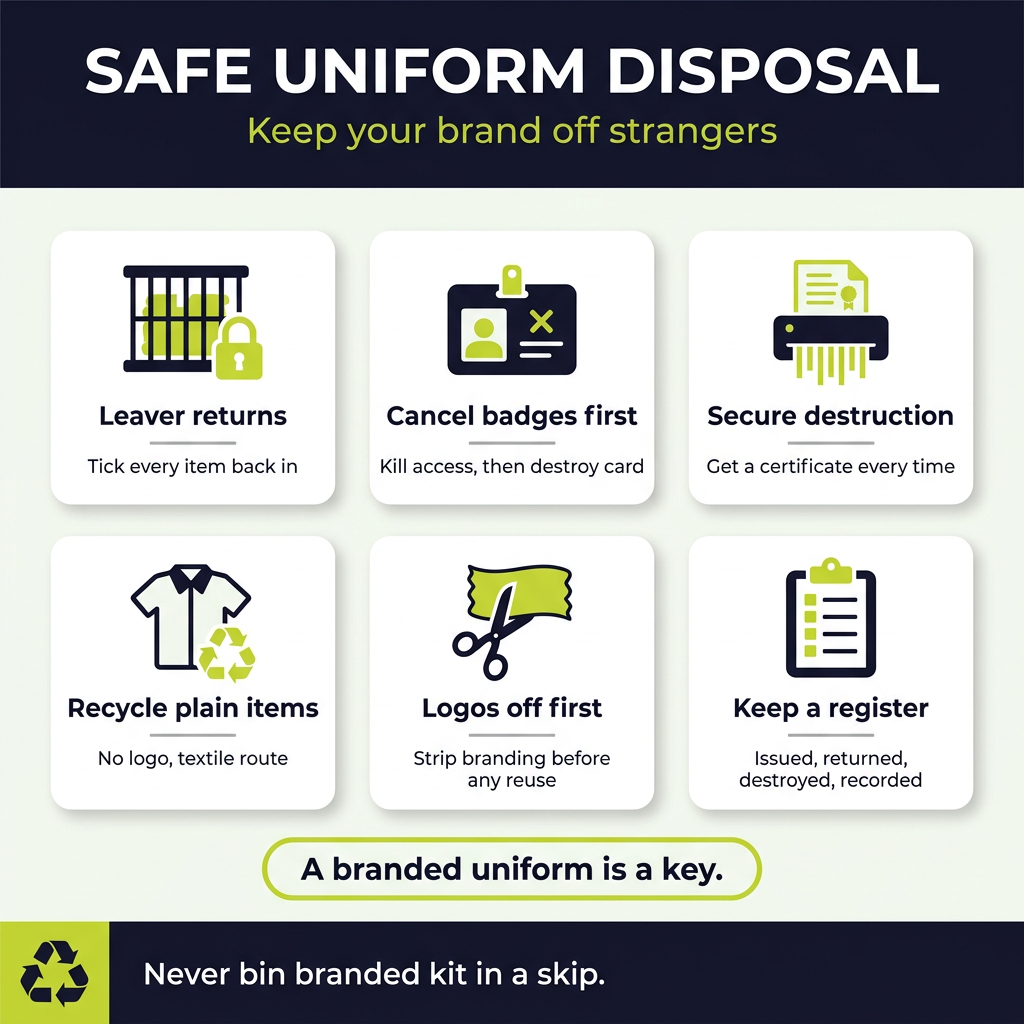
Treat badges like keys. Cancel the access first, then destroy the card, not the other way round.
If a badge carries personal details, it also holds personal data. Our guide to why the bin is a data breach covers the same risk for paper.
Build a returns process for leavers
Most branded clothing walks out of the business with the people who wore it.
Staff leave, and the uniform goes home with them. It ends up in a charity bag, a car boot sale or the household bin.
Put returns in the leaving checklist. List every item issued, and tick each one back in on the last day.
Ask for badges, lanyards, fleeces, jackets and hats, not just the shirts. The smaller items do the most damage.
Keep a locked returns bag or cage at each site. Returned items go straight in, and nobody takes them back out for reuse without a check.
For agency and seasonal staff, issue and collect on the same basis. Short contracts lose the most kit.
Our guide to duty of care rules explains why your waste stays your problem once it leaves the building.
Rebrands make a whole stock obsolete
A new logo creates a problem that most project plans ignore.
On launch day, every old shirt, jacket, cap and badge in every cupboard becomes waste. That includes the stock still boxed in the store room.
This is the moment uniforms most often end up in a general skip. The volume is large, and the deadline is tight.
Plan disposal into the rebrand. Count the old stock before the new kit arrives.
Collect it centrally, or have each site bag and seal it on the same day. Nobody keeps a few for the garden.
If you run many branches, one national contract keeps the process the same at every site. Our multi-site waste management guide shows how that works.
Secure destruction with a certificate
Branded items that could allow impersonation need destruction, not donation.
A secure route shreds or granulates the clothing so nothing wearable survives. The logo goes with it.
Ask for a certificate of destruction. It records what you sent, when it went and how the contractor destroyed it.
That paper matters if anyone later asks where the old uniforms went. It shows you took the risk seriously.
Our product destruction service handles branded clothing, badges and lanyards in sealed loads. Our guide to secure product destruction explains the process in more detail.
Keep the chain tight. Sealed bags, a named collection and a signed transfer note from your site to the destruction point.
Store it safely before it goes
The weak point is often the weeks between return and collection.
A returns cage left open in a corridor is a shop for anyone passing. A bag of jackets by the back door is worse.
Keep returned kit in a locked room or a sealed, lockable container. Limit the keys to one or two named people.
Book collections often enough that the stock never builds into a pile. A big rebrand may need a dedicated lift on the day.
Do not let staff take a few items home “for the garage”. Those shirts end up in a loft, then a charity bag, then on someone else.
Label each sealed bag with the site and date. When the certificate comes back, you can match it to the bag.
Textile recycling for unbranded items
Not every garment carries a risk.
Plain trousers, plain black tops and unbranded boots have no logo to borrow. They can go through a textile recycling route instead.
Sort them at the returns stage. Branded items go in the secure bag, and plain items go in the textile bag.
Check each piece before it goes. A logo on a sleeve or a name tag in a collar moves it to the secure pile.
Clean, dry textiles recycle better. Wet or soiled clothing may need a different route, so keep it separate.
PPE and hi-vis
Hi-vis vests and jackets often carry a company name across the back. On a building site or a road, that name opens gates.
Treat branded hi-vis exactly like any other branded uniform. Secure destruction, with a certificate.
Plain hi-vis can sometimes go for recycling, depending on the material. Ask your waste contractor what their route accepts.
Hard hats, safety boots and gloves often sit in the same returns cage. Separate them out, because they do not share a route with textiles.
Contaminated PPE is a different matter. Anything used with chemicals, clinical waste or other hazards needs a specialist route. Our guide to clinical waste disposal covers the healthcare side.
Logos off before reuse or donation
Some businesses want old uniforms reused, and that can work.
Remove every logo first. Unpick embroidery, cut off patches and strip any printed name.
If the logo will not come off cleanly, the garment goes for destruction instead. A faded logo still looks official from across a car park.
Never donate badges or lanyards in any form. There is no safe way to reuse them.
Check with the charity or reuse partner what they accept. Some will not take workwear at all.
Keep a register
A register turns good intentions into proof.
Record what you issued, to whom and when. Then record what came back, where it went and on what date.
Attach the certificates to the register. One folder, kept by one named person.
Review it at every rebrand and every big round of leavers. Gaps in the register show you where uniforms go missing.
For retailers with many stores, our guide to retail waste management covers the wider waste picture at branch level.
Frequently asked questions
Can I put old uniforms in the general waste?
You can, but you should not if they carry a logo. A branded uniform in a skip can let someone pose as your staff.
What does a uniform disposal service do?
It collects branded workwear, badges and lanyards in sealed loads. It destroys them securely and gives you a certificate.
Do I need a certificate of destruction?
It is good practice. The certificate shows what you sent, when it left and how the contractor destroyed it. That supports your duty of care.
Can unbranded workwear be recycled?
Usually, yes. Plain items with no logo or name can go through a textile recycling route.
What about old ID badges?
Cancel any access first, then destroy the card securely. Never reuse, donate or bin them whole.
How should we handle uniforms after a rebrand?
Count the old stock, collect it centrally on a set date, and send it for secure destruction. Plan this before the new kit arrives.
The bottom line
A branded uniform is a key to your business, and a skip is no place to leave a key.
Collect kit back from leavers, plan disposal into every rebrand, and destroy branded items with a certificate.
Recycle the plain items, strip logos before any reuse, and keep a register that proves where everything went.
Talk to your waste contractor and the relevant authority if you are unsure about a specific item.
Priority Waste provides secure uniform destruction across the UK. Confidential shredding sits on the same contract. Book a free waste review, and we will start with the cupboard full of old logos.

