
Look in the wood skip at the back of any industrial yard.
You will find clean pallets, joinery offcuts and a broken crate. Then a sheet of MDF, a painted door and a length of old fence post.
To you, that is a skip of wood. To the reprocessor, that is three or four different materials with different destinations. The worst one in the pile sets the route for the lot.
Wood waste comes in grades
The UK wood recycling industry sorts waste wood into four broad grades. The exact rules sit with the regulators and the reprocessors, but the general picture is simple.
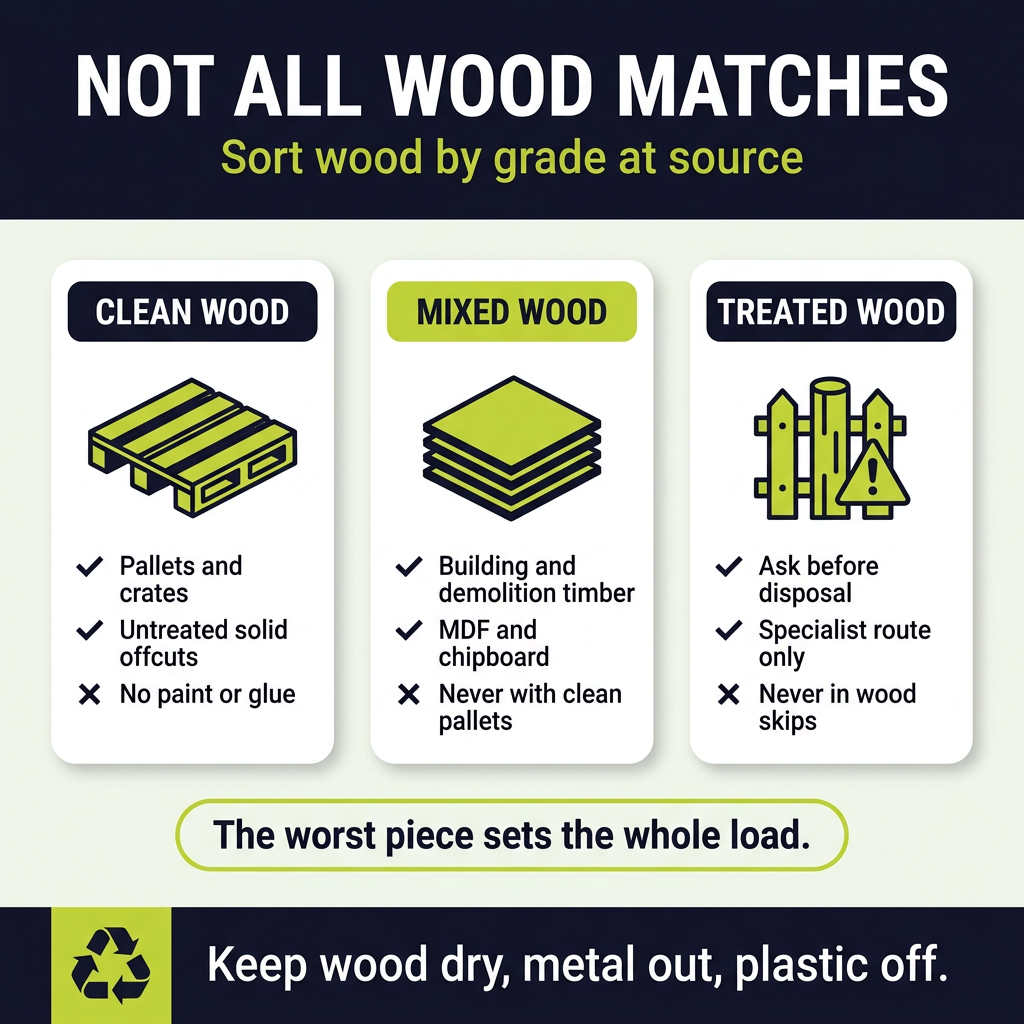
Grade A is clean, untreated wood. Think pallets, packaging, crates and offcuts from solid timber with no paint, glue or coating.
Grade B is building and demolition wood. It may carry nails, screws, some paint or light contamination, and it often includes old joists and floorboards.
Grade C is the mixed end of the scale. It covers wood from municipal collections and plenty of panel board, such as chipboard and MDF.
Grade D covers treated or hazardous wood. Fence posts, sleepers and timber soaked in heavy preservatives belong here, and it needs a specialist route.
The higher the grade, the more places the wood can go. Clean wood has several options, while mixed wood has fewer.
Why mixing grades downgrades the load
A reprocessor cannot inspect a skip board by board at the gate. They judge the entire load by what they find in it.
So a skip of clean pallets with a few sheets of painted MDF on top no longer counts as clean. It drops to the grade of its worst piece.
That has a commercial cost. Lower grade wood has fewer outlets, and the gate price for accepting it reflects that.
A single treated fence post can cause more trouble still. If the load may contain hazardous wood, the whole lot may need a different route.
Separate at the source. Two containers, one for clean wood and one for everything else, protect the value of the clean stream.
Our guide to separated collections for workplaces explains why splitting streams pays off across the whole site.
Pallets: the easy win
Pallets are the cleanest wood most businesses handle, and they also accumulate faster than anything else.
Good pallets have a second life. Many go back into circulation, and pallet companies will often collect undamaged ones.
Broken pallets still count as clean wood. Keep them in the Grade A container, away from painted or glued scraps.
Watch for pallets that came in treated or stained. Some imported pallets carry markings, and a few carry coatings. If in doubt, ask before you mix them in.
Warehouses produce pallets in volume, alongside film and card. Our guide to warehouse waste management covers the rest of the dock.
Offcuts from joinery and shopfitting
Joiners and shopfitters create a steady stream of offcuts. The grade depends on what they cut.
Solid timber offcuts with no finish qualify as clean wood. Keep them together, and keep them dry.
Shopfitting projects create variety quickly. A single fit out can produce solid timber, laminated board, painted panels and plastic trim in one afternoon.
Give every workbench two separate bins. One for clean solid timber, one for board and finished pieces.
Sawdust and shavings need their own thought. Clean sawdust from untreated timber has uses. Dust from MDF does not, and it is a health issue on the workshop floor as well.
MDF and chipboard
Panel board is everywhere. Office furniture, kitchens, shelving, retail display stands and flat pack furniture all use it.
MDF and chipboard contain resins and glues. That keeps them out of the clean grade, even when the board looks plain.
That does not mean they go to landfill. Panel board sits in the lower grades and still has a route, often as fuel.
The damage comes from mixing board into clean pallet loads. Keep MDF and chipboard in the mixed container, not the clean one.
Laminated and melamine faced boards follow the same rule. The coating adds to the reason they sit below clean timber.
Painted and treated timber
Paint creates the biggest grey area. A lick of modern paint on a door is one thing. Old paint can be another, and some older coatings contain lead.
Treated timber needs more care. Wood treated with heavy preservatives, such as some fencing, sleepers and older outdoor timber, can count as hazardous.
Never guess on treated wood. Ask your waste contractor, and check with the relevant authority if the source is unclear.
Keep anything you suspect out of both wood containers until someone checks it. A specialist route costs more than a clean one, but a rejected load costs more again.
Your duty of care covers describing your waste correctly. Calling treated timber clean wood creates a description problem, and the responsibility sits with you.
Keep it dry and free of metal and plastic
Grade is only half the story, because condition matters as much.
Keep wood dry. Wet wood weighs more, rots faster and is less use as fuel. Put a lid on the skip or store it under cover.
Remove the metal wherever possible. Hinges, brackets, banding and strapping all count as contamination in the wood stream.
That metal has value of its own. Our guide to commercial metal recycling rebates covers what scrap can earn back.
Nails and screws are a normal part of building wood. Big fixings, metal frames and wire are not.
Keep plastic out of the container as well. Film wrap, foam, plastic edging and bags all drag a load down. Strip them off before the wood goes in.
Where your wood actually goes
Separated wood has three main destinations, plus one specialist route.
Reuse comes first. Sound pallets, crates and good timber can go straight back into service.
Recycled board comes next. Panel manufacturers chip clean and lower grade wood and press it into new chipboard.
Biomass takes much of the rest. Wood that cannot become board can still become fuel for energy generation.
Hazardous wood goes to a specialist facility designed for it.
The cleaner your wood, the further up that list it travels. That is the practical case for sorting, and it helps any business aiming for zero waste to landfill.
Construction sites
Building sites produce more mixed wood than almost any other workplace. Formwork, packaging, offcuts, old joists and demolition timber all land at once.
Plan the wood skips at the start. One for clean packaging and pallets, one for building and demolition wood.
Keep treated timber and suspect pieces apart from both. Brief every trade, because one subcontractor can undo the system in a morning.
Our guide to tidy construction sites shows how sorting cuts both clutter and cost.
The right container matters too. Our guide to skips, wheelie bins and clearance crews helps you pick one that fits the volume.
Frequently asked questions
What are the UK wood waste grades?
The industry uses four broad grades. Grade A covers clean untreated wood and Grade B covers building and demolition wood. Grade C covers mixed wood and panel board, and Grade D covers treated or hazardous wood.
Can pallets go in with other wood waste?
They can, but it costs you. Keep pallets with other clean wood so the load stays at the top grade.
Is MDF classed as clean wood?
No. MDF and chipboard contain resins and glues, so they sit in the lower grades. They still have a recycling or fuel route.
What do we do with treated timber?
Keep it separate and ask before it goes anywhere. Heavily treated wood can count as hazardous and needs a specialist route.
Do nails need taking out?
Small fixings are normal in building wood. Remove large metal items, frames and wire, and keep plastic out completely.
Does wet wood matter?
Yes. Wet wood is heavier, breaks down faster and makes poorer fuel. Cover your wood skip or store it indoors.
The bottom line
Commercial wood waste is not one material. It comes in grades, and the worst piece sets the grade for the load.
Keep clean pallets and offcuts apart from board and painted wood. Treat anything treated with suspicion and ask first.
Keep the wood dry, pull the metal and strip the plastic.
Do that, and more of your wood goes to reuse and new board instead of the bottom of the list.
Priority Waste provides commercial wood waste recycling across the UK, through our own transport and a managed contractor network. Book a free waste review, and we will start with what is in your wood skip.

