
Walk past a school in the middle of August.
Nobody is in the building, and the car park is empty. The bins sit in their compound, lids shut, with almost nothing inside.
The lorry still comes every week. It lifts a few crisp packets, and the school pays for the visit.
A school runs on a timetable, so should the bins
Most school waste contracts are set once and left alone. They assume every week of the year looks the same.
A school does not work that way. It has three busy terms, half terms, two long breaks and a summer that runs for six weeks or more.
In term time, the bins fill fast. In the holidays, they barely fill at all.
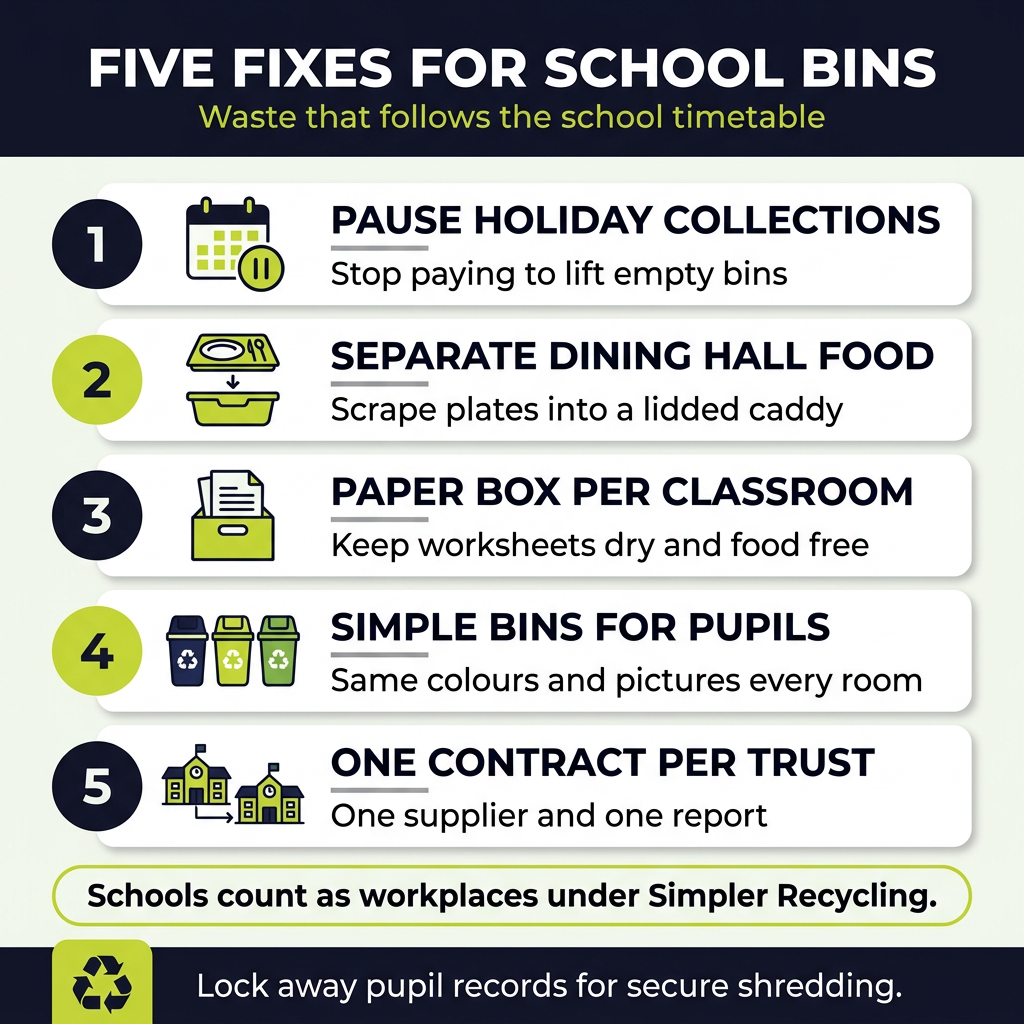
Pause or reduce lifts in the holidays. Ask your contractor to cut collections when the site closes. Then restart them for the first week back.
Plan the first and last weeks of term separately. Both produce far more waste than a normal week. Inset days, exam periods and open evenings change the pattern again.
A contract that cannot flex around the school year suits an office, not a school.
What a school actually throws away
School waste follows a short and predictable list.
Food: plate waste from the dining hall, peelings from the kitchen and the half eaten lunches from packed lunch boxes.
Paper and card: worksheets, exercise books, art paper, delivery boxes and the packaging from every supplies order.
Drinks containers: plastic bottles, cartons and cans from break time, lunch and the staff room.
Confidential paper: anything with a pupil’s name, a mark or a safeguarding note on it.
General waste: wrappers, film, tissues and the rest.
That is five streams. Only one of them really belongs in the general bin.
The dining hall is the heaviest stream
Food is the weight problem in most schools. Kitchens prepare hundreds of meals a day, and some of every meal comes back.
Plate waste, kitchen peelings and packed lunch leftovers all add up. Food is heavy, so it drives the weight of the general bin.
Separate food at the point of scraping. Put a lidded caddy or food bin by the dining hall clear down station. Pupils scrape plates into it before trays go back.
Give the kitchen its own food bin for prep waste. Kitchen staff sort well once the bin is close.
Our food waste collections suit school kitchens and dining halls. Taking food out of the general bin also cuts the smell in the bin store.
Classroom paper and card
Classrooms produce clean paper and card every day. It is one of the easiest streams to recycle.
Put a paper box in every classroom. Make it the only bin in the room for paper, so worksheets never reach the general bin.
Keep it dry and free of food. A sticky yoghurt pot ruins a box of good paper.
The supplies cupboard and the school office produce the card. Flatten every delivery box before it goes out.
Our paper and cardboard service handles card in volume. That matters after a big stock order or a new term.
Bottles, cartons and the break time rush
Drinks containers arrive in waves. Break time and lunch produce most of them within an hour.
Plastic bottles, cans and cartons belong in a recycling stream, not the general bin. Our plastic recycling service covers bottles and other rigid plastics.
Tell pupils to empty drinks first. Half full bottles soak whatever they land in.
Place drinks bins where pupils eat and play. Near the dining hall exit, the tuck shop and the playground doors.
Contamination is the main risk with school recycling. Our guide to dry mixed recycling contamination rules explains what spoils a load.
Simpler Recycling applies to schools too
Schools count as workplaces under Simpler Recycling in England. That means separate collections for food waste, paper and card, and dry recyclables.
The rule applies whether the school is a maintained school, an academy or an independent school.
Our guide to the Simpler Recycling deadline sets out the timeline. Check with your local authority or the relevant regulator for anything specific to your site.
Duty of care also applies. The school stays responsible for its waste until it reaches a licensed carrier.
Getting pupils to sort
A recycling scheme in a school depends on children. They will sort well if the bins make it obvious.
Keep the bins simple. Two or three openings are enough in a classroom. Too many choices slow pupils down, and they pick the nearest hole.
Use colours and pictures. The same colour for the same stream in every room. Show a picture of a bottle on the bottle bin and a picture of paper on the paper bin.
Younger pupils read pictures faster than words. Older pupils respond to clear rules and a reason.
Give the job to an eco council. Pupils who check the bins and report back hold their classmates to account. They also explain the rules better than any poster.
Brief the cleaners and the site team. If they tip every bin into one sack after school, the pupils’ sorting goes to waste.
End of year clear outs and refurbishment skips
The last weeks of the summer term bring a different kind of waste.
Classrooms empty their cupboards. Old displays, broken furniture, books and stock all come out at once.
Then the summer works begin. Refurbishments, new flooring and classroom moves fill skips in a matter of days.
Book the clear out early. A skip or a clearance team costs less when you plan it than when the bins overflow. Our guide to skips, wheelie bins and clearance crews helps you pick the right service.
Keep the clear out separate from the normal bins. A summer of furniture in the general bin wrecks the weight and the cost.
Pupil records and confidential paper
Schools hold sensitive data on every child. Reports, assessments, medical notes and safeguarding records all exist on paper somewhere.
None of it belongs in an open paper box. Use locked consoles in the school office and the staff room.
A secure shredding service destroys the paper and issues a certificate. Our guide to confidential waste shredding explains why the bin can become a data breach.
Electrical items and science lab waste need their own specialist routes. Old laptops, chemicals and lab equipment should never go in general waste.
One contract for a whole trust
Multi academy trusts often run many schools on many contracts. Each school books its own lifts, and nobody sees the full picture.
Put the schools on one contract. One supplier, one set of streams and one report across the trust.
That makes it easier to compare sites, plan holiday pauses and spot the school with the overflowing bins.
Central reporting also gives the business manager consistent recycling figures for governors and trustees.
Our national multi site service covers trusts spread across several areas. We work across the UK with our own transport and a managed contractor network.
Frequently asked questions
Do schools need to separate their waste?
Yes, in England. Schools count as workplaces under Simpler Recycling, so food waste, paper and card, and dry recyclables need separate collections.
Can we stop collections in the school holidays?
Often, yes. Ask your contractor to pause or reduce lifts when the site closes, then restart them before term begins.
How do we get pupils to recycle properly?
Keep bins simple, use the same colours in every room and show pictures of each item. An eco council keeps the scheme going.
What should we do with old pupil records?
Keep them out of open recycling. Use locked consoles and a secure shredding service that issues a certificate of destruction.
Can a multi academy trust use one waste contract?
Yes. One contract across the trust gives you one set of streams, one report and easier holiday planning.
What about science lab and electrical waste?
Both need specialist routes. Keep them out of the general bin and arrange a separate collection.
The bottom line
School waste follows the timetable, and most contracts ignore it.
Pause the lifts in the holidays, separate food at the dining hall and put a paper box in every classroom.
Keep the bins simple for pupils, lock away the confidential paper and book the summer clear out early.
Then put the whole trust on one contract, so every site follows the same plan.
Priority Waste provides school recycling and waste collections across the UK. Food waste and confidential shredding sit on the same contract. Book a free waste review, and we will start with the bins in August.

